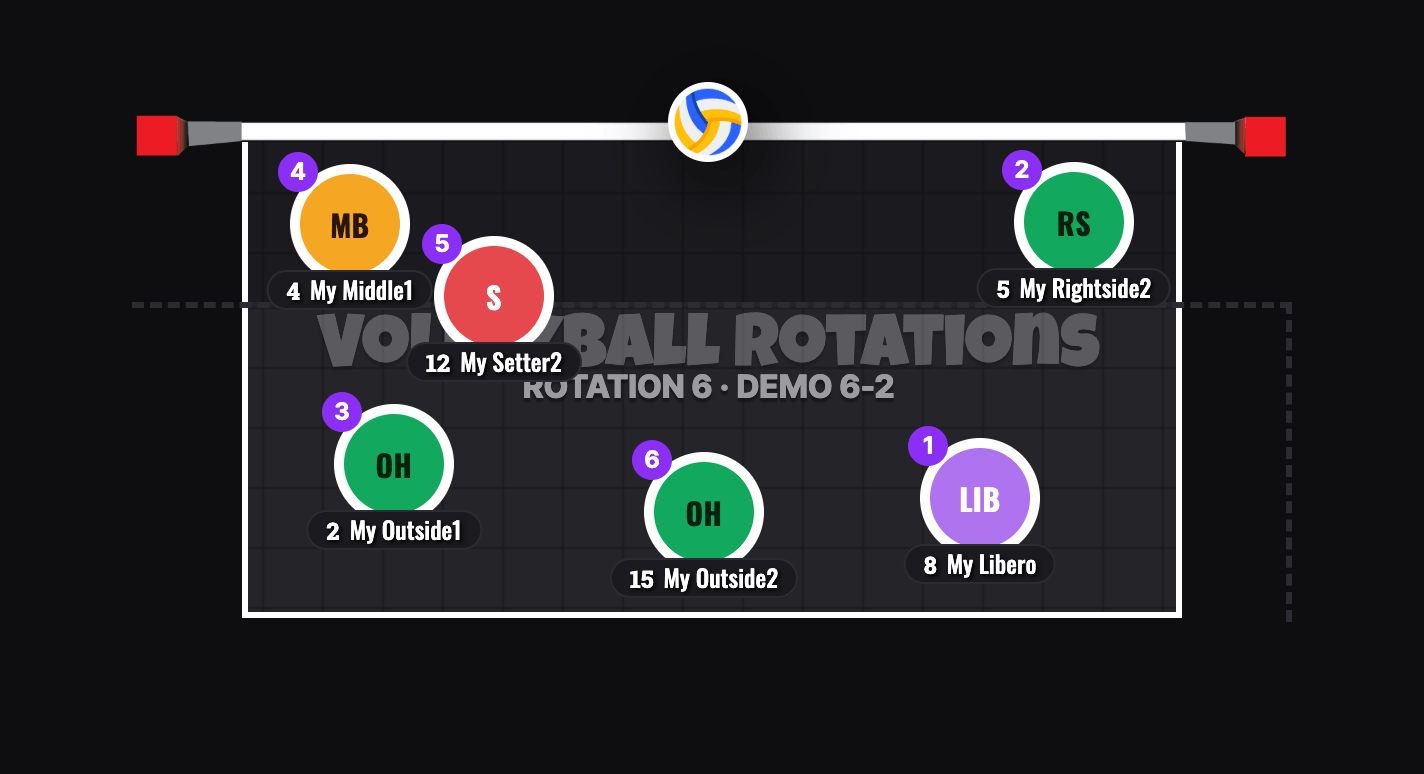
This is the companion to our 6-2 volleyball rotations guide and the 6-2 version of the 5-1 cheat sheet: all six serve receive formations of a standard 6-2, straight from the Volleyball Rotations app with a generic roster, so you can match each shape against your own lineup. And here is the good news before we start: because your two setters sit opposite each other in the rotation, rotations 1 and 4, 2 and 5, and 3 and 6 are mirror images of each other. Teach three shapes and you have taught all six.
How to read the diagrams
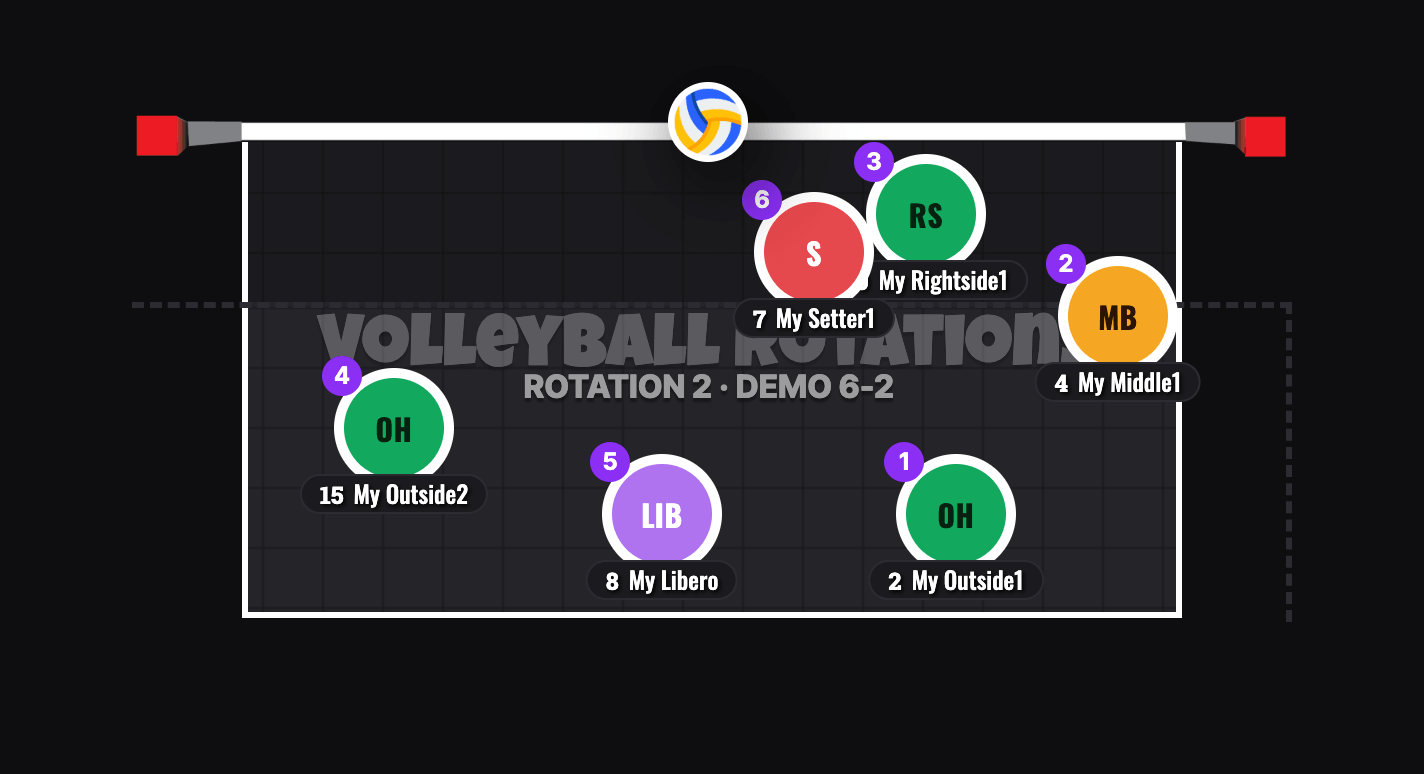
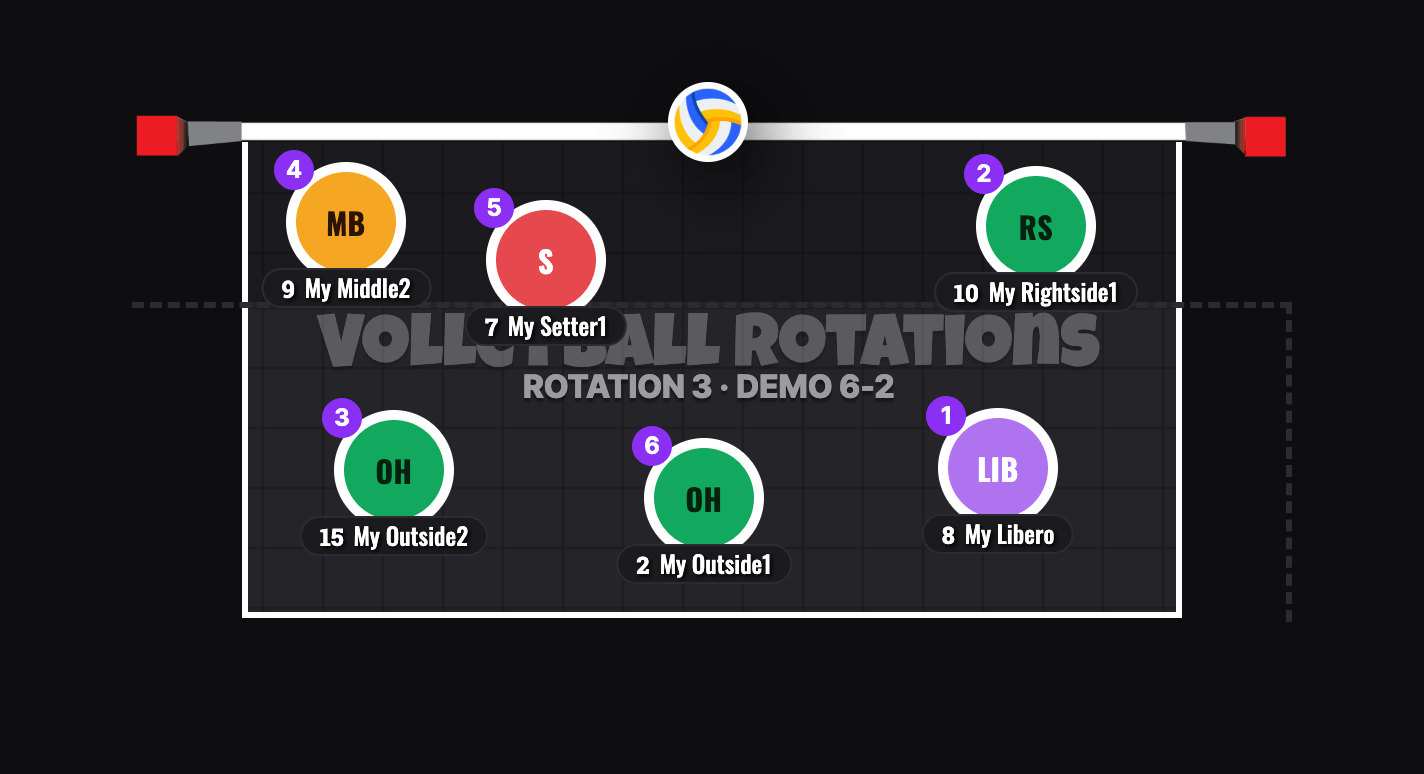
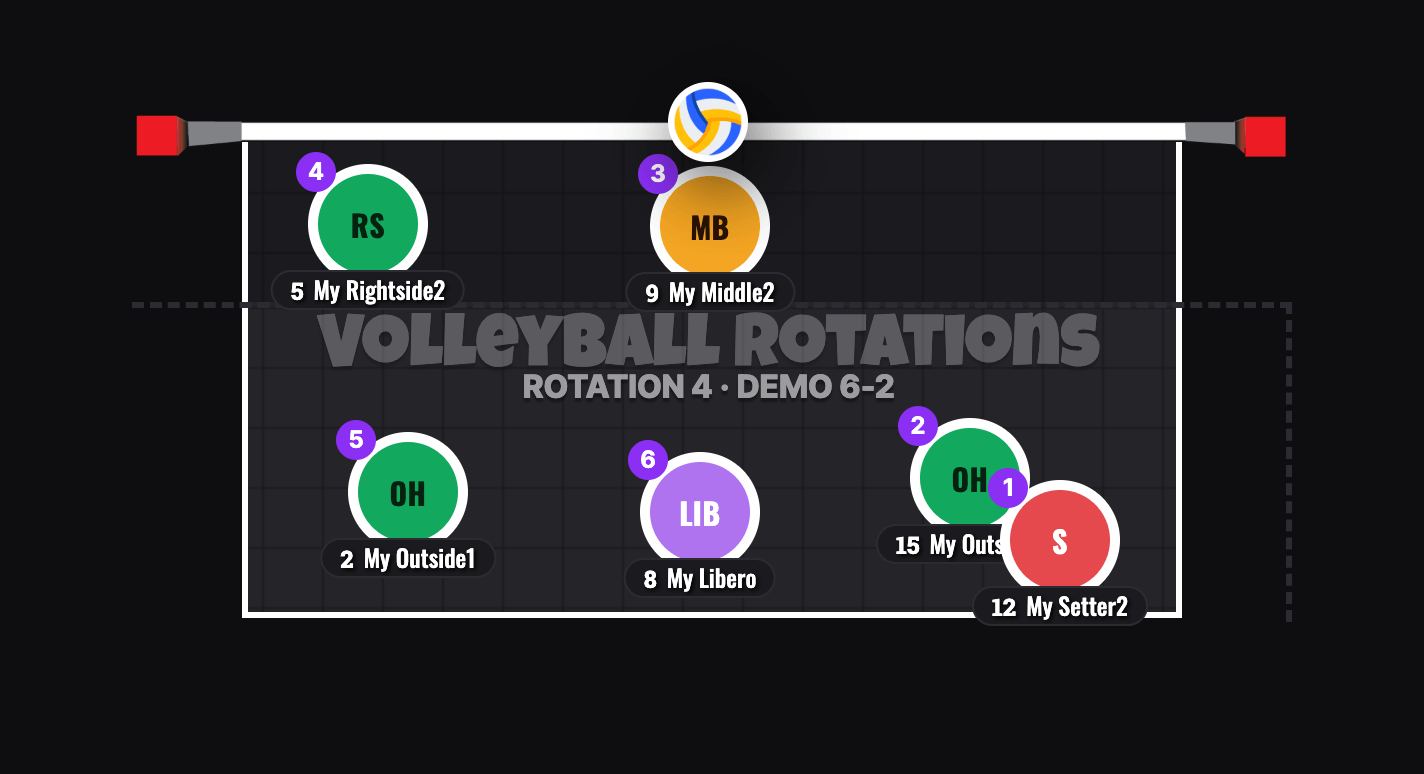
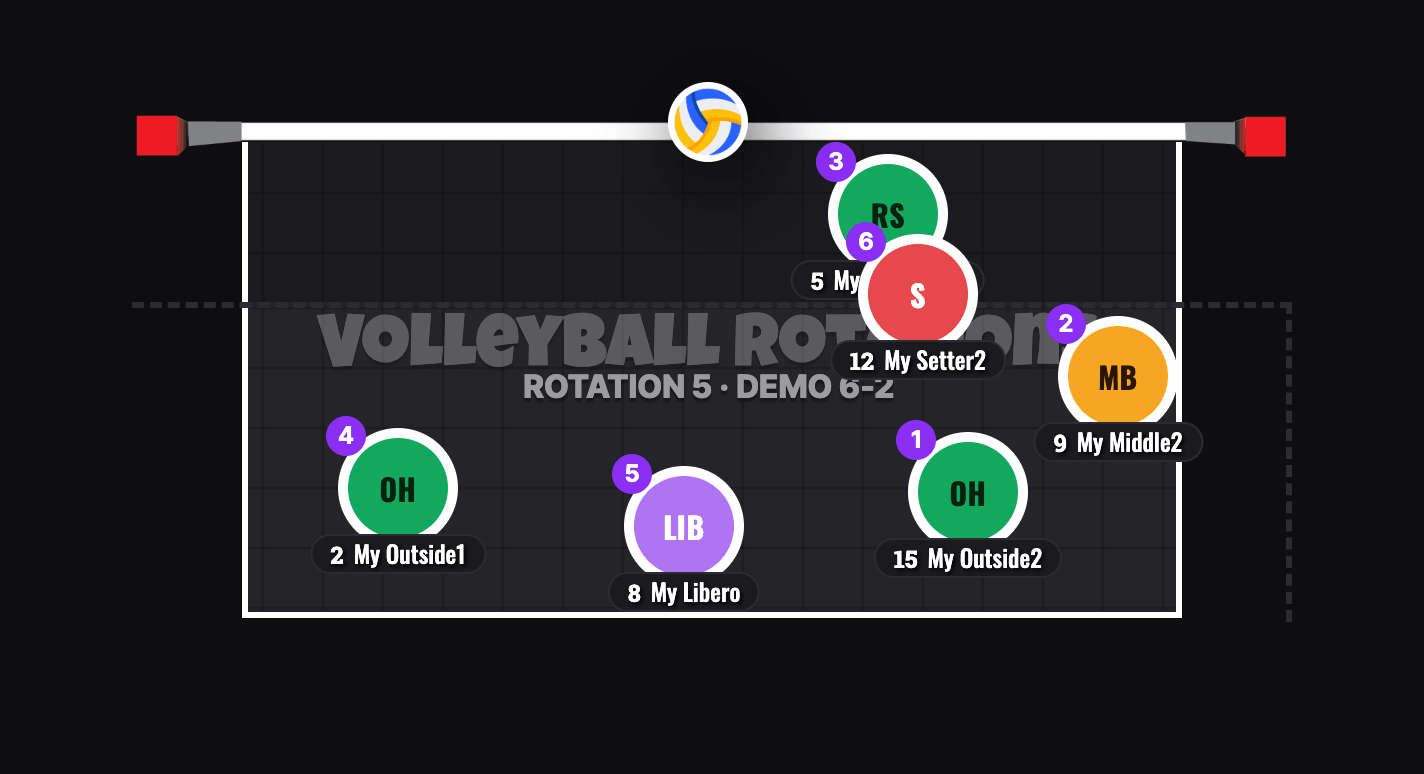
The purple badge on each player is her position in the service rotation – the thing the overlap rule cares about at the moment of serve. The red circle is whichever setter is currently in the back row running the offense. The libero wears purple and takes a back-row middle spot (all her special rules are covered in volleyball libero rules explained). In every diagram, the organizing priority is the same: get the back-row setter as close to her target zone at the net as the overlap rule allows, and give the three passers clean seams.
Rotation 1: Setter 1 hides behind the outside
Setter 1 starts in position 1, tucked in behind the outside hitter on the right sideline. Her release is short – a few steps forward to the net – which is why most 6-2 teams start their sets here. Three passers spread the court and the front row is already close to its attacking spots.
Rotation 2: the setter climbs to the net
Setter 1 is now in position 6, and rather than pass from the middle of the court, she pushes all the way up behind the right-side hitter at the net. She only has to stay in order with her row neighbors, so she can legally start almost exactly where she wants to end up. The libero and both outsides handle the full passing lanes behind her.
Rotation 3: short release from the left
Setter 1 reaches position 5, the farthest rotational spot from her target – and the stack answers by starting her high and left, beside the middle, so the long diagonal run becomes a short lateral one. This is the rotation where an untrained 6-2 setter arrives late all night; the stack exists so she never has to sprint.
Rotation 4: Setter 2 takes over
The handoff rotation. Setter 1 has rotated to the front row (where most teams either let her hit or substitute), and Setter 2 now runs the offense from position 1 – the same tucked-in spot behind an outside hitter you saw in rotation 1, mirrored onto the other personnel. If your team knows rotation 1, it already knows this one.
Rotation 5: the mirror of rotation 2
Setter 2 in position 6, stacked up at the net behind the right side – the identical shape to rotation 2 with the setters swapped. Note the libero holding down middle back in both versions: her job does not change no matter which setter is running the offense.
Rotation 6: the mirror of rotation 3
Setter 2 makes the same high-left start beside the middle that Setter 1 made in rotation 3. One more side-out from here and you are back to rotation 1 with Setter 1 behind the outside – the full cycle, three shapes, each one run twice.
The three shapes to actually teach
Setter behind the outside (rotations 1 and 4): shortest release on the court. Teach it first – it is the shape your team will start sets in.
Setter stacked at the net (rotations 2 and 5): the overlap rule lets her start where she is going. Players always think this one looks illegal; walk the neighbor relationships and show them it is not.
Setter high and left (rotations 3 and 6): the longest natural run, shortened by the stack. If a rotation is going to break down in a match, it is this one – give it the most walk-through reps.
These diagrams show a generic roster. The version that actually helps your players is the one with their own names on the court – build your lineup from the 6-2 template in the Volleyball Rotations app, adjust the serve receive stacks to fit your passers, and share the team key so every player carries all six rotations on her own phone. Still weighing the 6-2 against a one-setter system? Start with 5-1 vs 6-2. And for the simplest two-setter look – both setters staying in the front row – see the 4-2 rotations cheat sheet.
You just downloaded Volleyball Rotations and you’re staring at a demo team called, well, “Volleyball Rotations.” Here’s the good news: getting your own team on the court takes two steps and about a minute. No blank-slate panic, no manual entry from scratch. Here’s exactly how I set up a new team. Step 1: Name your […]
Live Stats now flags your strongest and weakest rotation automatically as you take stats – here is how to read the badges and coach off them between sets, not just after the match.